Stephen Chojnicki
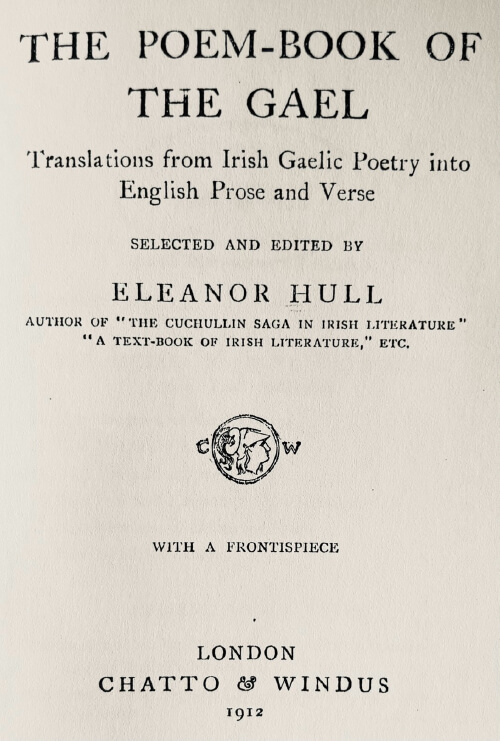
The Poem-Book of the Gael
A podcast recently introduced me to the medieval Irish “Psalter of Quatrains” (Saltair na Rann), and although I expected it to be interesting, I didn’t expect to love it as much as I did. I borrowed Eleanor Hull’s The Poem-Book of the Gael from my local library, intending to read only the section devoted to the Psalter, but its sacred oral history felt like the Book of Jubilees in verse with a Celtic twist. To my delight I also loved the Christian and secular poetry that followed, discovering a world that was reverent, imaginative, moral, and intensely human. Though I have no Irish ancestry, the Christianity of the British Isles forms part of my cultural and religious inheritance as a North American, so this felt less like someone else’s distant past than a meditation on the larger story into which I was born and continue to live. Whether you enjoy sacred history in verse or simply want to encounter the rich voices of medieval Ireland, I recommend The Poem-Book of the Gael (read it online: www.gutenberg.org/ebooks/46917).
Laura Ehrhardt
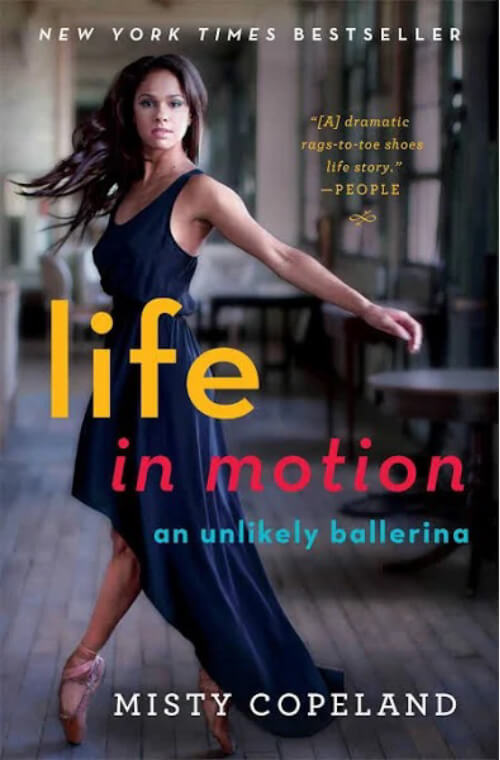
Life in Motion: An Unlikely Ballerina by Misty Copeland
I have always been intrigued by the rigor and precision of ballet, but Misty’s unique journey goes far beyond that. Despite her humble beginnings and a late start to ballet at age 13, she was dancing en pointe just months later. Misty would eventually become a principal dancer at the American Ballet Theatre, surpassing many in the chorus who had been training longer. Her story is an inspiring testament to perseverance and God-given talent.
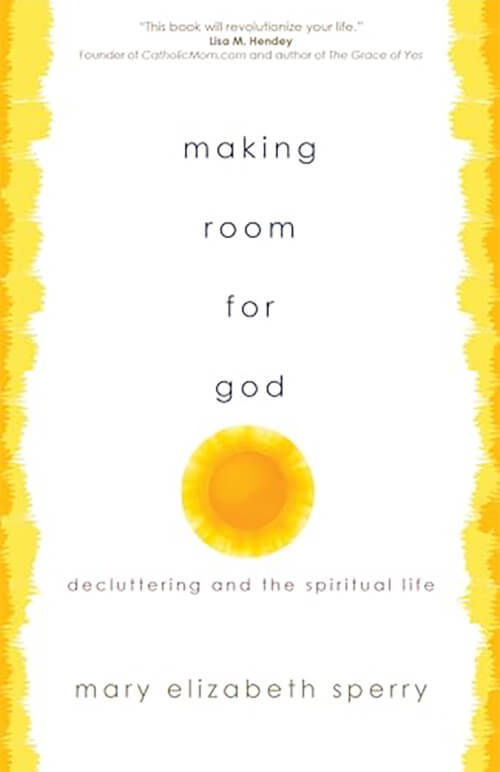
Making Room for God: Decluttering and the Spiritual Life by Mary Elizabeth Sperry
With the plethora of decluttering books out there, I am rereading this one. Mary's candor and humor make her advice sound encouraging rather than a "do it this way to be organized forever" lecture. She writes from the perspective of a self-proclaimed pack rat, explaining how clearing away our no longer useful possessions doesn't just give us clean spaces but helps us to make more room for God.
Blake Habersetzer
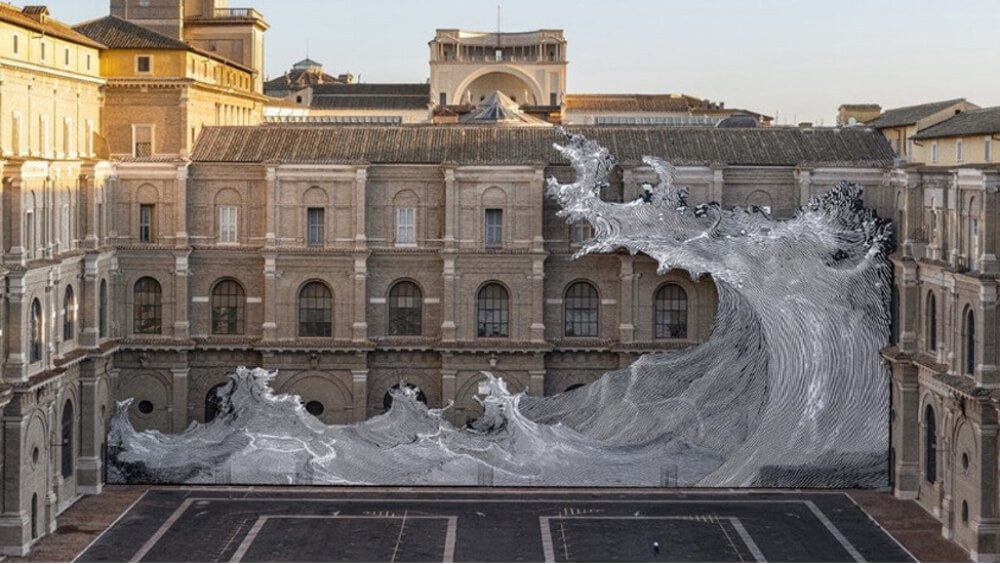
“Diluvium” by JR
As a designer I always look for ways to create contrast in my work—not only in color but also in scale, style, texture, and context. I saw this exhibited recently when I came across a work by the street artist, JR, entitled “Diluvium” outside the Vatican Apostolic Library. The work is made entirely of stark black and white lines, inspired by Gustave Doré’s 1866 woodcut illustration of the biblical flood. Adding a dramatic flair built his work atop the 16th century library. His work completely dominates the viewer—flood waters pouring down upon them. Further JR juxtaposes the modern, graphic feeling of his wave with rigidity and warmth of his sixteenth-century facade. Despite this difference “Diluvium” still creates a dialogue between this historic architecture and his own art. It is precisely the difference that makes this work effective. “Diluvium” does not attempt to cover up the library, but instead, embraces the facade fully. The work asks you to look closer at the beauty that was already there.
Sam Landon
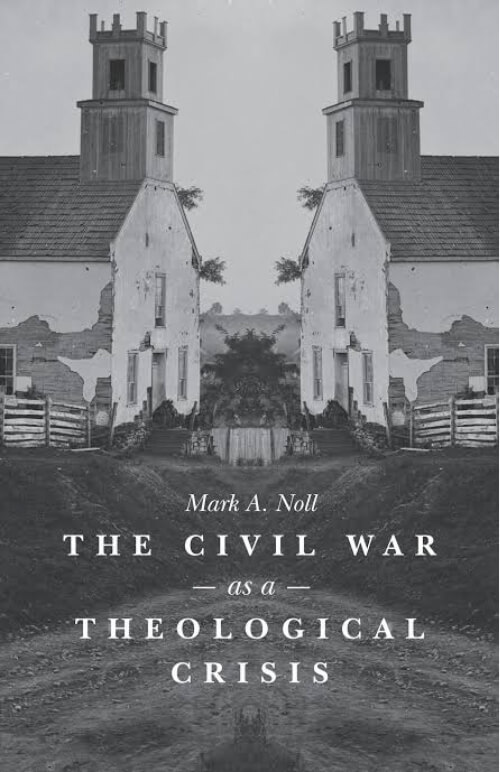
The Civil War as a Theological Crisis by Mark Noll
I recently read The Civil War as a Theological Crisis by Mark Noll. He examines a variety of contemporary religious perspectives on the American Civil War, particularly regarding American chattel slavery and the role of providence. The most enduring and interesting aspect of the work was Noll’s argument that Americans’ embracing of the Enlightenment and the belief that truth (including religious truth) was easily accessible to anyone earnestly seeking it made the debates more vehement and affected what sorts of arguments the wider public found credible. By contrast those outside the United States found different arguments convincing and recognized the inability of American Protestantism to meaningfully resolve questions around slavery and providence. I find this especially interesting considering American missionary efforts throughout the 19th and 20th centuries that propagated this Enlightenment approach to Christian truth both within the United States and abroad.

Jonalee Maslanka
Fulton Sheen
In thanksgiving for the recent advancement toward the canonization of Fulton J. Sheen, I decided to listen to the podcasts of his former television broadcasts. With each podcast I look forward to deepening my understanding of our beautiful faith and learning how to express it in words to share with others. Bishop Sheen has a way of beautifully blending the life of Jesus and Sacred Scripture while showing how I can work on reflecting both in my own life. He is truly genuine in his efforts to bring souls to God through the spoken word, possessing the rare ability to converse with the listener and touch their hearts, no matter where they are on their spiritual journey. I feel so fortunate to have such easy access to these well-delivered and much-needed lessons of truth.

Patty Szafranski
The Exorcist Files
Lately I’ve been listening to The Exorcist Files on my way home from work. I have a long commute, and the stories make the drive go by quickly. They’re gripping and sometimes a little unsettling. I also like how they make me think about faith and the spiritual world. It may be an unusual way to unwind, but I look forward to listening.
John Tuttle
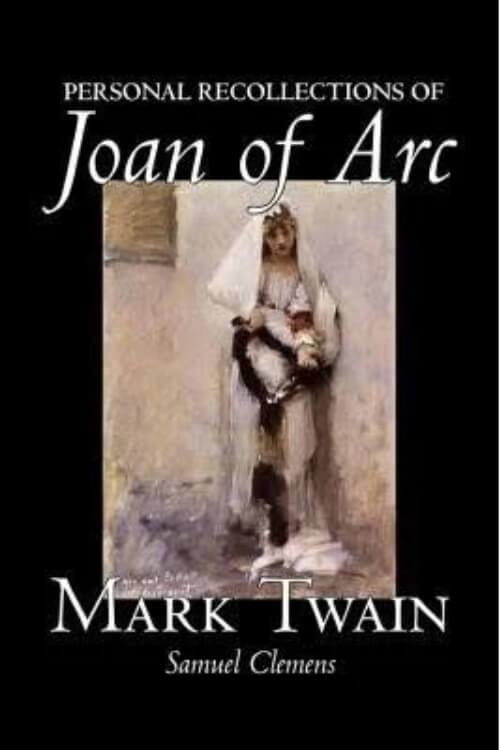
Joan of Arc by Mark Twain
When I'm reading for leisure, I usually take my time. It has taken me over a year to read Mark Twain's Joan of Arc cover to cover, and I'm in the last chapters of the novel, which depict Joan's trial and passion. The book came highly regarded by Fr. Columba Jordan in a YouTube video highlighting great books about the saints. I've learned that in his own life Twain became increasingly pessimistic toward the Church and the notion of a benevolent God in general. Twain doesn't get everything right about Joan of Arc's character, but he nevertheless paints an admirable picture of the "girl soldier" and commander of the French army. The novel is a fine example of Twain's keen wit and affinity for storytelling.
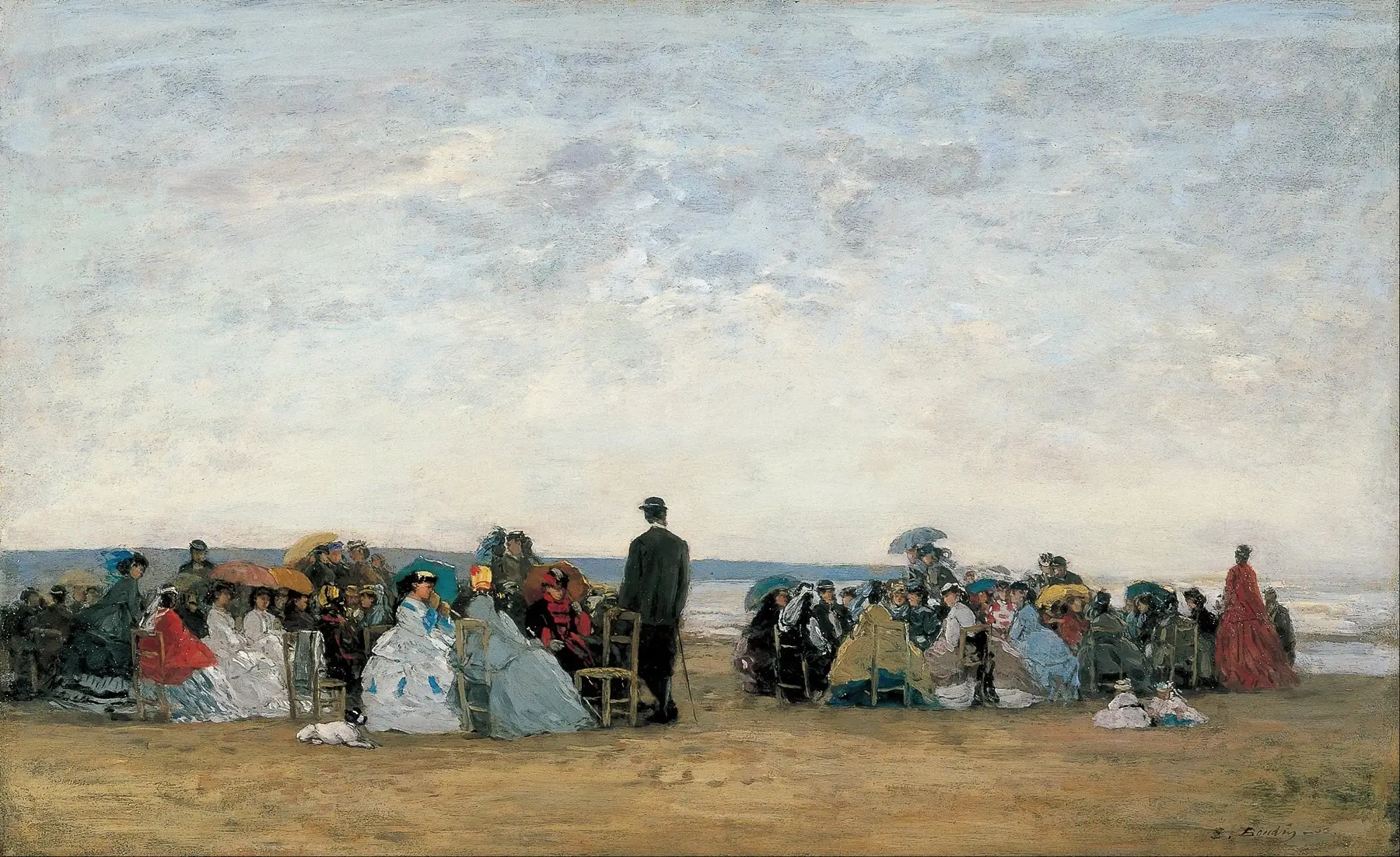
The Beach Near Trouville by Eugène Boudin.