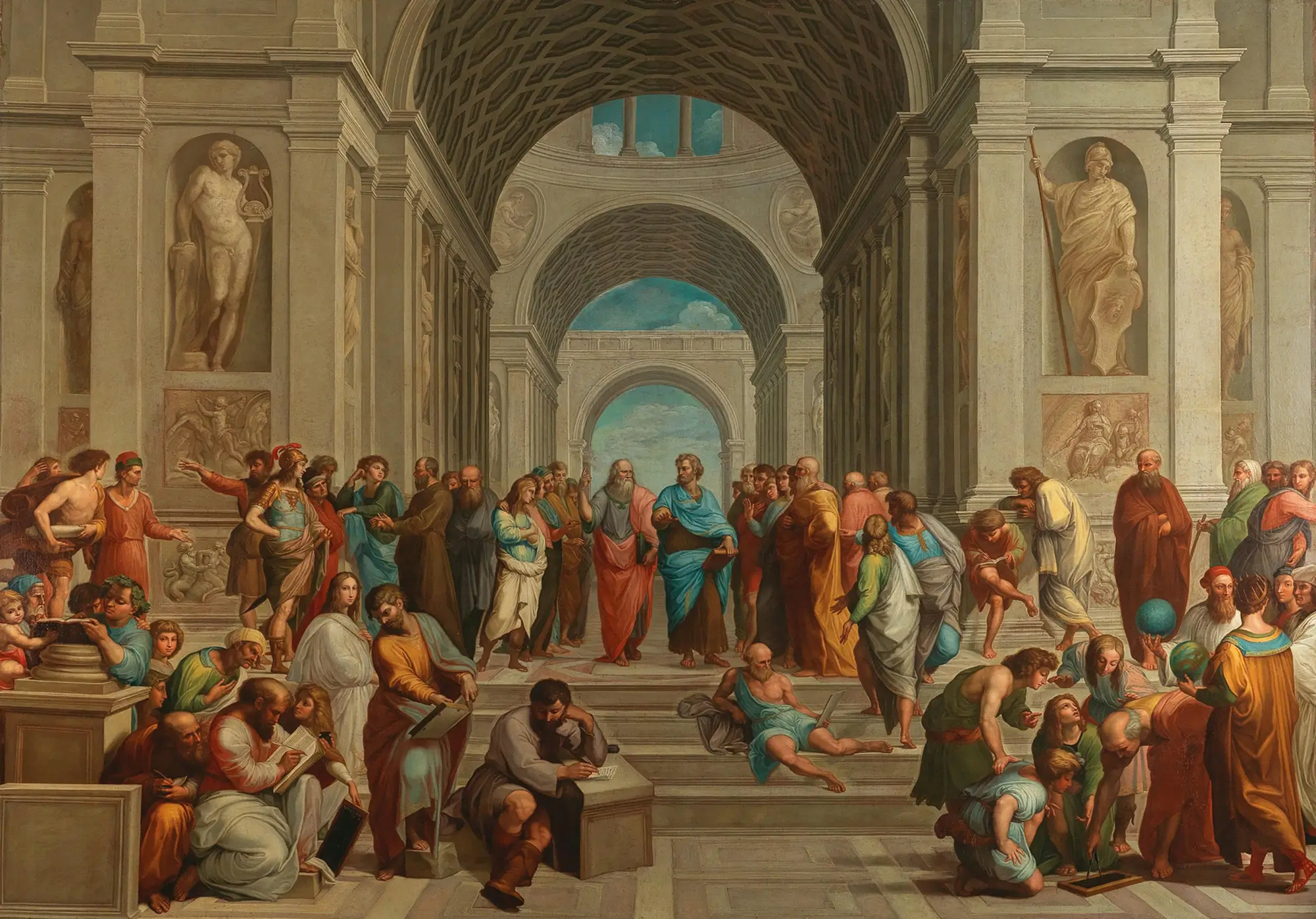
This Sunday, September 20, we celebrate Catechetical Sunday. This recognizes and calls forth those responsible for the great work of “catechesis,” or teaching the faith. While this is often focused on instructing children, catechesis has an important role in the life of every Christian. We are called to present the truth of the Gospel and build up in it every person we may encounter. This includes those who have little Christian formation, those who are strong in their faith, and even ourselves.
Building Up the Weak
The first example of catechesis that likely comes to mind is that of instructing those with little to no knowledge of the Faith. This essential work is the normative way in which men and women are brought to the saving knowledge of Christ. Paul puts it succinctly when he writes, “How are men to call upon him in whom they have not believed? And how are they to believe in him of whom they have not heard? And how are they to hear without a preacher?” (Rom 10:14). This work is of such importance that it has been identified as one of the principal works of spiritual mercy (cf. CCC 2447).
We certainly carry out this work when we volunteer to instruct children in CCD or adults in OCIA. But this is also accomplished when we speak with our coworkers about our faith and the hope it brings, when we are willing to hear and dialogue about the difficulties our non-Catholic friends may have with Church teaching, or when we discuss the faith with our children. In doing so, we are helping to sow the seeds of faith in the hearts of others, whether or not we see it grow in the near future.
Strengthening the Strong
Catechesis is necessary not only for those who are young or those who are new to the Church, but also for those well-established within the body. Paul wrote to the church at Rome that he was “eager to preach the gospel to you also” (Rom 1:15). He wished to continue the teaching of those Christians already in the city, thereby strengthening them amid difficulties. This continual growth is necessary, otherwise we will fall under the same rebuke that was given to the church at Ephesus from our Lord: “I have this against you, that you have abandoned the love you had at first” (Rev 2:4).
Elsewhere in the Scriptures it is assumed that Christians will progress in their knowledge of the faith, as when the author of Hebrews writes, “Therefore let us leave the elementary doctrines of Christ and go on to maturity” (Heb 6:1). We can help strengthen the faith of others through initiatives like small group Bible studies, but also when we build up our parish community through regular service and simple hospitality. This supports our brothers and sisters in their daily walk with the Lord and helps draw them to ever greater heights of holiness.
Preaching the Gospel to Ourselves
Catechesis to the weak and to the strong are only possible when we ourselves are firmly rooted in Christ. Paul exhorted Timothy to, “Remember Jesus Christ, risen from the dead, descended from David, as preached in my gospel” (2 Tim 2:8). Timothy was called to continually return to the gospel and, as it were, preach it again to himself. He must make this good news truly his just as Paul had done, understanding that it applies to him and his own life. He is to reinforce these truths and ponder them, always learning more, even while serving as the bishop of the church at Ephesus.
If this personal return was necessary for Timothy, it is undoubtedly necessary for us too, and on a daily basis. This strengthening of our own faith occurs anytime we profess it, as in the Nicene Creed recited at Mass or the Apostles’ Creed prayed at the beginning of the Rosary and other devotions. It also comes when we dedicate ourselves to study and to spiritual reading. “Don't neglect your spiritual reading. — Reading has made many saints” (The Way, 116). Study of this sort is not meant to give us a list of dry facts or trivia, but to help us know Christ better. Knowing him more truly, we may love him more deeply, and serve him and his Church more fruitfully.

Sam Landon
Sam Landon is an Associate Editor at Midwest Theological Forum. He holds a master’s in religious studies specializing in New Testament and early Christianity from the University of Chicago. He has worked extensively in campus ministry to help young adults grow closer to Christ. He and his wife live in Chicago, IL.