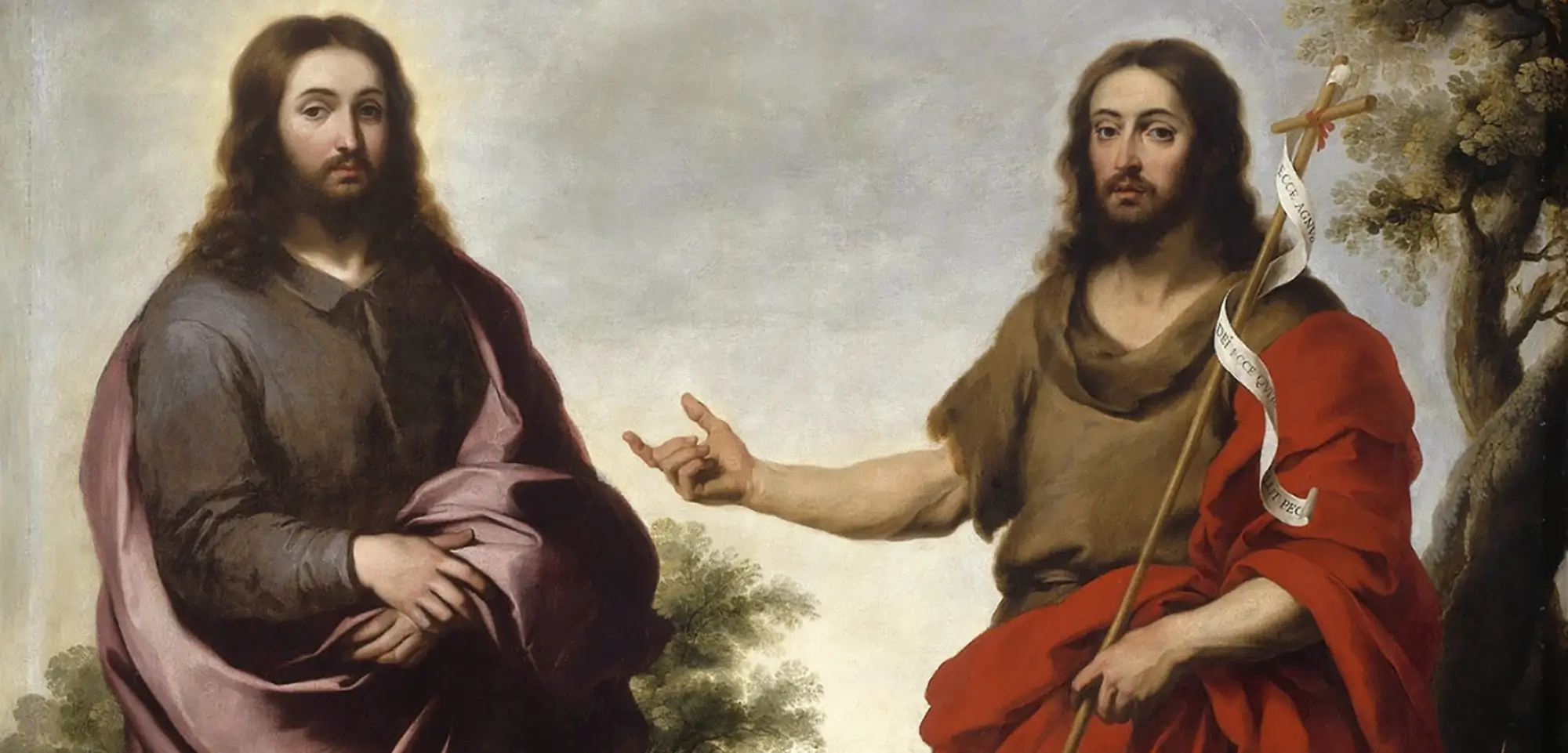
Humans instinctively understand that big events and important figures need to be announced. This is not about pride or attention-seeking. We often feel the strongest urge to announce something when it is not even about us. Whether it is the start of a sports game or the entrance of royalty, the world leans in when the Herald speaks.
The Archetypes
The Herald is part of a larger group of characters one finds in stories known as archetypes. These archetypes depict the representative characteristics common among humans. While there is controversy about how the individual human person has seen himself in light of a greater journey, there is no question that when one looks through history at the stories that were told for political purposes, liturgical reenactments, or entertainment (or all of them at once), one can find archetypes.
While the archetypes themselves predate modern psychological or literary analysis, the recent work of Carl Jung sought to examine them more closely in order to understand human thinking. While there are varied lists one can find to divide or subdivide, a widely accepted and simplified list that seeks to synthesize the psychological and the literary elements is to be found in Christopher Vogler’s The Writer’s Journey.
Vogler’s list includes the Higher Self, the Mentor, the Herald, the Shadow, the Ally, the Trickster, the Threshold Guardian, and the Shapeshifter. Not only do these eight provide an interesting variety of archetypes one can find in many stories, but they also provide a balance as each archetype has its opposite. While these archetypes are often represented by individual characters in simpler myths whose intention was to present didactic lessons about the world, they can also be found collectively in a single character at different points in his character arc.
What Is a Herald?
In the framework of the hero’s journey, the Herald is the figure who initiates the story’s movement. Joseph Campbell, building on the work of Carl Jung, identifies the Herald as a recurring archetype: a symbolic figure who appears to announce change. Psychologically, the Herald represents the moment when the unconscious intrudes on the conscious life. The Herald may be a character, a message, a sudden event, or even an interior nudge, but it always marks the beginning of something important. It tells the Hero, and the audience, that the ordinary world is no longer enough.
In Scripture, Heralds abound. Angels, prophets, priests, women, outcasts–all announcing the story’s direction. Their function is not just to inform but to confront. The world is about to change, and someone must inform the people before it does.
Herald of the New King
The most famous human Herald in history is certainly an accolade reserved for St. John the Baptist. Like the Heralds of ancient Rome when a new community was conquered, he was called to “prepare the way of the Lord” (Mark 1:3).
No commentary on the figure of St. John the Baptist leaves out the jarring nature of his persona. Between the clothing and the diet, the Gospels make sure to present to you something different about this prophetic figure. This is an opportunity to reflect upon the prophetic nature of the Herald. They are not quite synonymous, but there is an overlap found in the connection between the prophetic actions and the heraldic function.
If the Herald is meant to announce the news, the prophet will announce it, but he will do so with more than words. Notice that this is not a replacement of the words. The outstanding actions of the prophet combine with the words to make them more impactful. St. John the Baptist lived out in the desert, outside the confines of the Temple that many considered to be corrupted, wore a camel hair shirt, and ate locusts as a way to supplement his message of repentance (Matthew 3:1-12).
If St. John the Baptist’s message was primarily about repentance, a metanoia, then it had to emphasize a different way of thinking and living in order to have a clear path for the message of the Messiah to trod. Thinking and living differently are not mutually exclusive. So it is fitting that both were evident in the life and words of St. John the Baptist.
Jesus himself speaks to the qualitatively different nature of John and his message in Luke 7:28, though this is also to emphasize the even greater difference between the old covenant and the new. This makes John the perfect Herald for the Gospels because he personifies the change that should take place in our expectations. He makes clear that the very intention of his strange behavior is to subvert our expectations for the Messiah.
Announcing the King’s Sacrificial Conquest
In the same way that the Hero himself will be unconventional, so too will be his battle with and slaying of the dragon. To communicate this, the Herald must also announce this change in an unexpected way.
One of the most well-known announcements of St. John the Baptist, which reveals one of the deepest truths of the nature of Jesus Christ, is repeated at Mass. In the Gospels, one of the final words we hear directly from the mouth of the Baptist tells us to “Behold, the Lamb of God, who takes away the sin of the world” (John 1:29). In declaring Jesus to be the “Lamb of God,” he is communicating that the Hero will conquer the dragon by self-sacrifice. Fittingly, the priest makes this same declaration, becoming a Herald himself, inviting us to enter into that very same sacrifice.
Just as St. John the Baptist lived the same prophetic call that he announced, he would also participate in a similar sacrifice of the king he came to herald. John would also be martyred for standing up for the truth of the Gospel. Like Christ, his body was ground under the will of earthly power, but the Truth that he proclaimed lived through his witness. Like Christ, St. John the Baptist will also be raised from the dead because of his commitment to the Truth.
The Gospel is full of Heralds, angelic and human, who did the same thing for the greatest battle ever fought. The Hero still fights. And Heralds are still needed. For inspiration, we have the saints, those numerous Heralds of the greatest Champion who competed in the most significant fight that ever was. Heralds continue to be sent generation after generation in order to wake the world up to an awareness of the fight and, more importantly, to introduce the world to the Champion, to Jesus Christ. The Great Commission given to us by the Lord tasks us with announcing the Good News with similar enthusiasm, clarity, and spirit!

Mike Schramm
Mike Schramm holds an MA in theology and an MA in philosophy. He lives with his wife and seven children in southeastern Minnesota where he teaches theology and philosophy at Aquinas High School and Viterbo University. You can find his writing at Intellectual Takeout, Busted Halo, and the Voyage Comics Blog. He is also the managing editor of the Voyage Compass, an imprint of Voyage Comics and Publishing.


Artwork: Saint John the Baptist Pointing to Christ by Bartolomé Esteban Murillo