Celebrating the Liturgy of the Hours is often described as prayer, but our experience of this liturgy is more comprehensive than simple recitation. In the first lecture in this series, Rev. Eusebius Martis, O.S.B., described the spirituality of the Liturgy of the Hours as something genuinely felt through what we Catholics see, speak, sing, hear, and even smell in the public prayer of the Church. Far from being reducible to a person’s emotion or sentiment, this approach shows how the liturgy forms Christians through their bodily posture and through the concrete rhythms of communal worship.
In the second lecture in this series, Rt. Rev. Abbot Gregory Polan, O.S.B. presented the Psalter as a bridge that connects the synagogue’s prayer to Christ’s worship and, in turn, to the Church’s sacramental life.
Liturgical “Haptics”:
The Senses of The Church’s Prayer
Fr. Eusebius Martis centered on the fact that liturgical prayer is a lived reality. To this end, he used the analogy of haptic feedback devices, such as smartphones and tablets, which give sensible impressions, such as vibrations, to guide and inform our actions.
We do not approach God as disembodied minds; we are body-soul composites, and the Church’s prayer meets us there. The imagery employed by Fr. Eusebius underscores that without a human body, there would be no sacramental life. Likewise, without sensory reality—such as signs, voices, places, and gestures—the Church’s prayer would lose an essential dimension of how it is celebrated. In the Liturgy of the Hours, our senses are not distractions from spirituality; instead, they are part of how we learn and receive the spiritual lessons God extends to us.
Christians use perceptible things to bring the eternal to mind. When the Church’s prayer moves through visible and audible means—such as when prayers are spoken, when Psalms are sung, and when voices blend together—those perceptible realities help our souls rise beyond immediate experience. The Liturgy of the Hours is thus not merely an activity that comes and goes throughout the day. Rather, the Hours shape one’s day, bringing eternity into contact with ordinary time.
Singing Together:
Formation Through Real Limitations
Fr. Eusebius gave practical insights on communal singing. In group prayer, a person might sing off key, believe he or she is an opera singer, or struggle to hear the person behind him or her. These moments, which masquerade as sources of frustration or embarrassment, are really occasions for growth. When the group sings imperfectly, charity becomes necessary, patience must be practiced, and humility naturally enters. Communal prayer reveals that worship is not a stage for individual excellence.
Far from romanticizing poor participation, Fr. Eusebius noted that spiritual fruit lies in how we respond to the lived weaknesses of others as well as to our own weaknesses. In this sense, liturgical haptics are also moral formation: The senses and social realities of the Liturgy of the Hours become training in virtue.
Even the architecture of a church, with its acoustic design, has spiritual meaning. When voices blend and the room helps unify sound, Christians perceive—sometimes subtly—that prayer is not merely an individual output. Every voice belongs to a larger harmony. By helping achieve a unity of sound, the building itself can lead Christians to a truer understanding of their role as members of the one Body of Christ: The liturgy is communal prayer, and the Church’s prayer is the fullest expression of the human reaching out to the divine.
The Fixed Structure
That Teaches the Heart
Fr. Eusebius emphasized the impact of the structure of the Liturgy of the Hours: the cursus (the “course” or “progression”) of psalmody and fixed prayers. One temptation in private devotion is to treat prayer as something that must match the individual Christian’s mood. For example, “If I feel capable, I pray,” or, “If I feel moved, I pray.” But the Liturgy of the Hours resists this kind of personalization. It will often not fit each person’s current inner state.
Yet this is precisely where the liturgy’s ecclesial character becomes a source of grace. The Hours fit the Body of Christ, not just the fluctuating emotions of an individual Christian. In a striking image, Fr. Eusebius compared communal assistance to how different types of blood cells rush to support all the other cells in a body. The whole Body of Christ supplies what an individual Christian cannot provide in that moment.
Fr. Eusebius gave examples drawn from his experience: Just as a mourner at a funeral may be too sorrowful to audibly sing or respond, other members sing and respond for him or her. The Church’s worship is designed for real people with real limits so that the prayer of the faithful is a communion in which all members carry each other.
Steady, Sober Prayer
Fr. Eusebius described the Liturgy of the Hours as more than an experience. Instead of being “a flash in the pan,” the liturgy is designed to be a steady, sober, consistent prayer offered over an extended period of time. Because the Hours are prayed repeatedly throughout each day, the liturgy forms a Christian in a pattern that breaks into daily life, just as praying regular devotions like the Angelus breaks into the ordinary rhythm of time.
The repeated cadence of the Liturgy of the Hours has a communal dimension. Regular prayer, far from remaining enclosed within an individual Christian, forms a people with a shared rhythm and a shared language. Over time, participants discover that the liturgy trains them to pray with the Church rather than merely to seek what momentarily comforts them.
Everything Is Found
in the Psalms
If the Liturgy of the Hours builds communion over time, the Psalms provide the substance of that communion. Everything needed for prayer is found in the Psalms—every cry, every lament, every desire, every act of praise. Some scholars maintain that every human emotion can be found in the Book of Psalms. These Psalms give the Church a common vocabulary for the full range of human longing before God. They also teach worshipers to pray beyond themselves and to attune to people who are marginalized, who truly yearn for God and cry out to him.
The Liturgy of the Hours is a school for the soul. The fixed structure is not a constraint that kills spontaneity; it is a formation that disciplines the heart to say what the body says, to pray with the Church’s language, and to learn God’s intent for human life.
When we pray the Psalms in the Liturgy of the Hours, we Catholics are not simply using ancient devotional texts. We are entering a living tradition that begins in Judaism, is transformed in the earliest Christian worship of the Apostolic Church, and continues through the Church’s development of her liturgical language.
Jewish Christians and the
Synagogue’s Liturgical Rhythm
In the second Society for Catholic Liturgy lecture, Abbot Gregory Polan presented the continuity of the Psalms as a key point of shared continuity between Judaism and early Christianity. Jewish Christians, including the Apostles, did not begin prayer from scratch; they participated in the liturgical life of the synagogue. In synagogues, the Jewish people prayed the Old Testament, including the Psalms, and used patterns of prayer preserved in later sources, such as the Talmudic tradition. They also prayed the Psalms at home, which formed their daily lives as well as their public worship.
This frames the Psalms not as texts that Christianity later picked up but as sacred texts already embedded in the worship of God by his people. The earliest Christian prayer inherits an established way of praying: A familiarity with God’s words spoken in praise, lament, and thanksgiving.
Early Christian Worship:
Sanctifying the Hours of Christ
Abbot Gregory presented early Christian evidence for psalmic worship. He referenced testimony from the third century, especially that of St. Cyprian and Tertullian, on how Jewish patterns of morning and evening sacrifice helped shape Christian worship hours.
Particularly striking is how Christians came to sacralize certain times of day by linking them to events in Christ’s Passion and Death and the life of the Early Church. The third hour has spiritual meaning in relation to the outpouring of the Holy Spirit on the Apostles. The sixth hour is associated with the great darkness that emerged at the time of Christ’s Death. Likewise, the ninth hour is connected to the piercing of Christ’s side. In short, the Church does not merely repeat Jewish prayer patterns; it reads those rhythms anew through the mystery of Jesus Christ.
Abbey Psalms and Canticles
On this psalmic foundation, the Church in English-speaking regions has undertaken a more recent liturgical work: Abbey Psalms and Canticles. Abbot Gregory described them not as a break with tradition but as a new step within the Church’s long history of praying the Psalms.
Translation must take culture, language, and comprehension seriously. In any liturgical worship, the psalm text is not studied like a purely academic work; it is prayed. Abbot Gregory emphasized the importance of using one translation across all liturgies, such as the Holy Mass, the Liturgy of the Hours, and the Order of Baptism.
The Grail Psalter, which has been used in the Liturgy of the Hours for five decades, was valued because it offers stirring poetry with a strong rhythm. Nevertheless, it presents a challenge: This translation of a translation often yields a paraphrase rather than a strict rendering. The Abbey Psalms and Canticles project sought to revise the Grail Psalter while making the English text closer to the Hebrew.
Abbot Gregory referenced the Jerusalem Bible as an influence on Abbey Psalms and Canticles. This work includes Old Testament psalmody and the New Testament and Gospel Canticles used in the Liturgy of the Hours and in Responsorial Psalms used in the Holy Mass.
Translation Challenges:
The Psalms Are Everywhere
Psalm translation is difficult because the Psalms function inside a wide range of liturgical texts. They appear in many places, including antiphons and Eucharistic Prayers. Thus, an English translation cannot be isolated; it must resonate with other liturgical elements and with other Scriptures, not only with the psalm itself.
Abbot Gregory highlighted two further sources of complexity: The Vulgate and modern scholarship. In Abbey Psalms and Canticles, he considered how Hebrew words and phrases were translated into Latin and how those older decisions have shaped theological and liturgical usage.
A related concern is how to handle inclusive language. Any translation using inclusive phrasing should ensure it corresponds coherently with other biblical texts and maintains a recognizably biblical and ecclesial consistency.
An English translation must solve an internal liturgical problem: The psalm must still fit the language of worship. This is where rhythm and accent become practical theology. If the psalm can be prayed well—spoken smoothly, sung naturally, and heard intelligibly—the text can accomplish its purpose in the liturgy.
Conclusion:
Entering the Mystery
In the Q&A portion, the discussion returned to form and sound. Abbot Gregory noted Abbey Psalms and Canticles keeps a strong rhythm by incorporating practical constraints, such as having no more than three major accents per line and no more than three syllables between major accents. The goal was not artistic maximalism but prayability—a psalm that can be carried by the voice of the Church, especially in communal recitation.
From this, a profound vision emerged: The Psalms are a holy inheritance that traces from synagogue worship through the mystery of Christ and into the Church’s living liturgical practice. Translation is not merely textual work; it is pastoral and ecclesial work aimed at enabling Christians to pray the Scriptures with faithfulness, clarity, and rhythm.
The Liturgy of the Hours is designed for people to practice it. It is not primarily a codex put down in writing to be admired; it is a word “living and active” (Heb 4:12), which we are called to become familiar with. When approached in faith and in humility, the Liturgy of the Hours does what every liturgy always does: It makes the invisible visible and the eternal present.
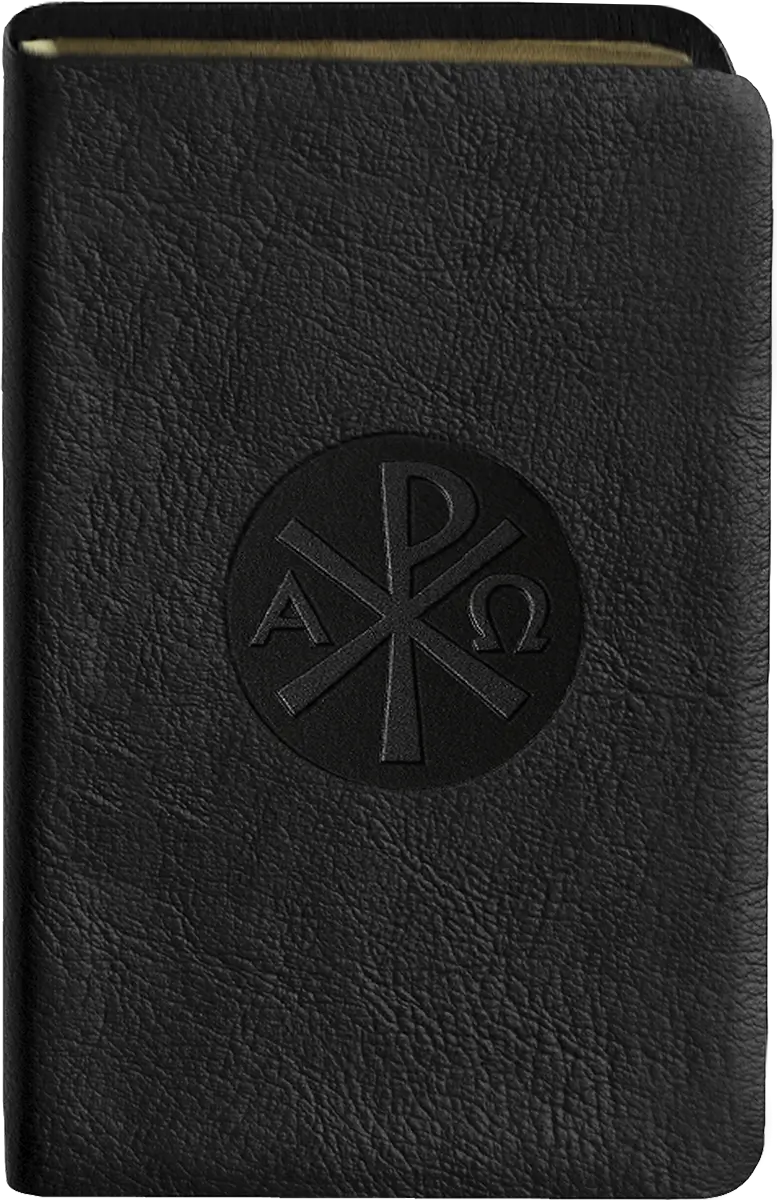
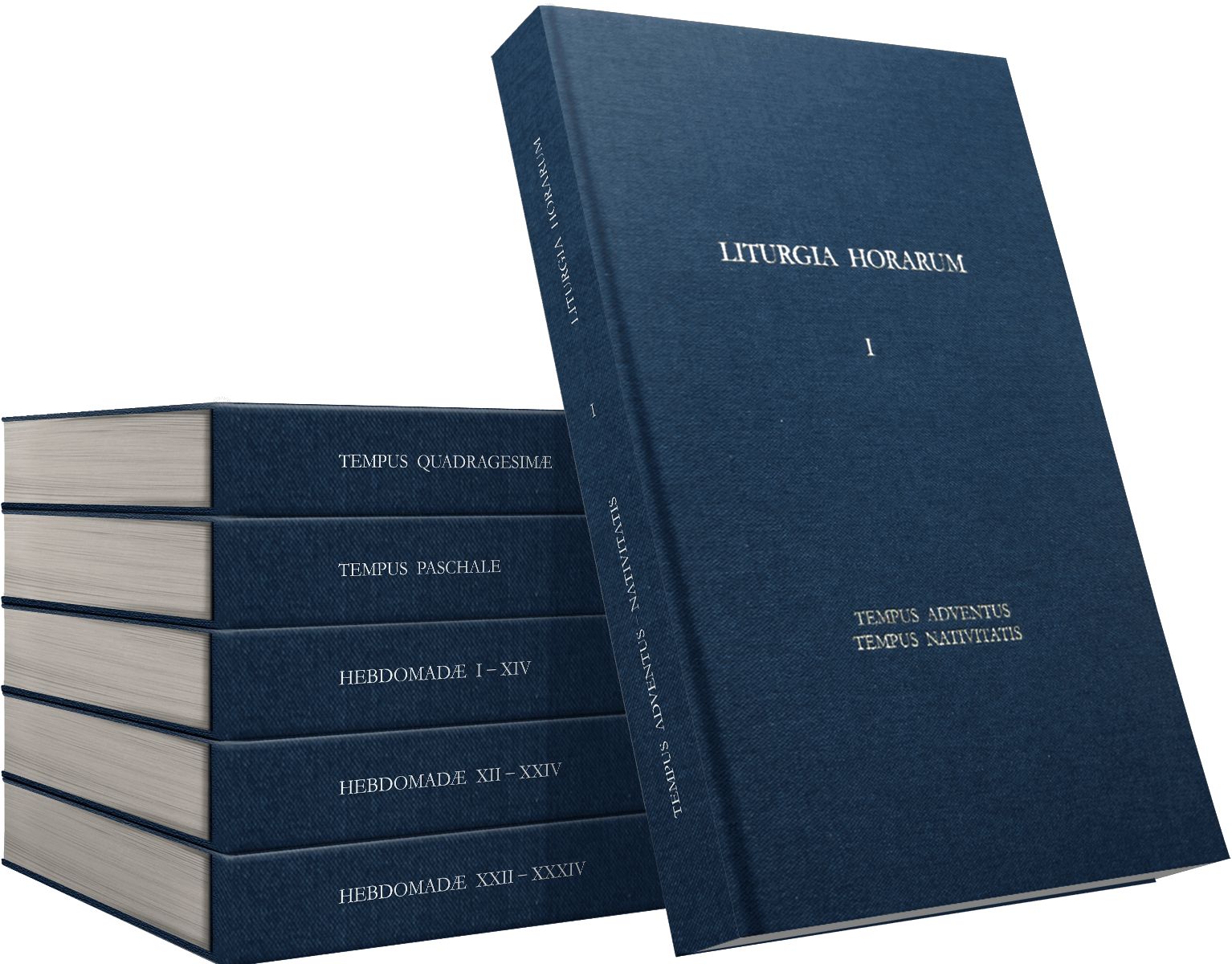
Midwest Theological Forum was selected by the Committee on Divine Worship of the USCCB to publish Extracts of the Liturgy of the Hours, Second Edition. Click here to learn more about the ongoing work being done on the Liturgy of the Hours.
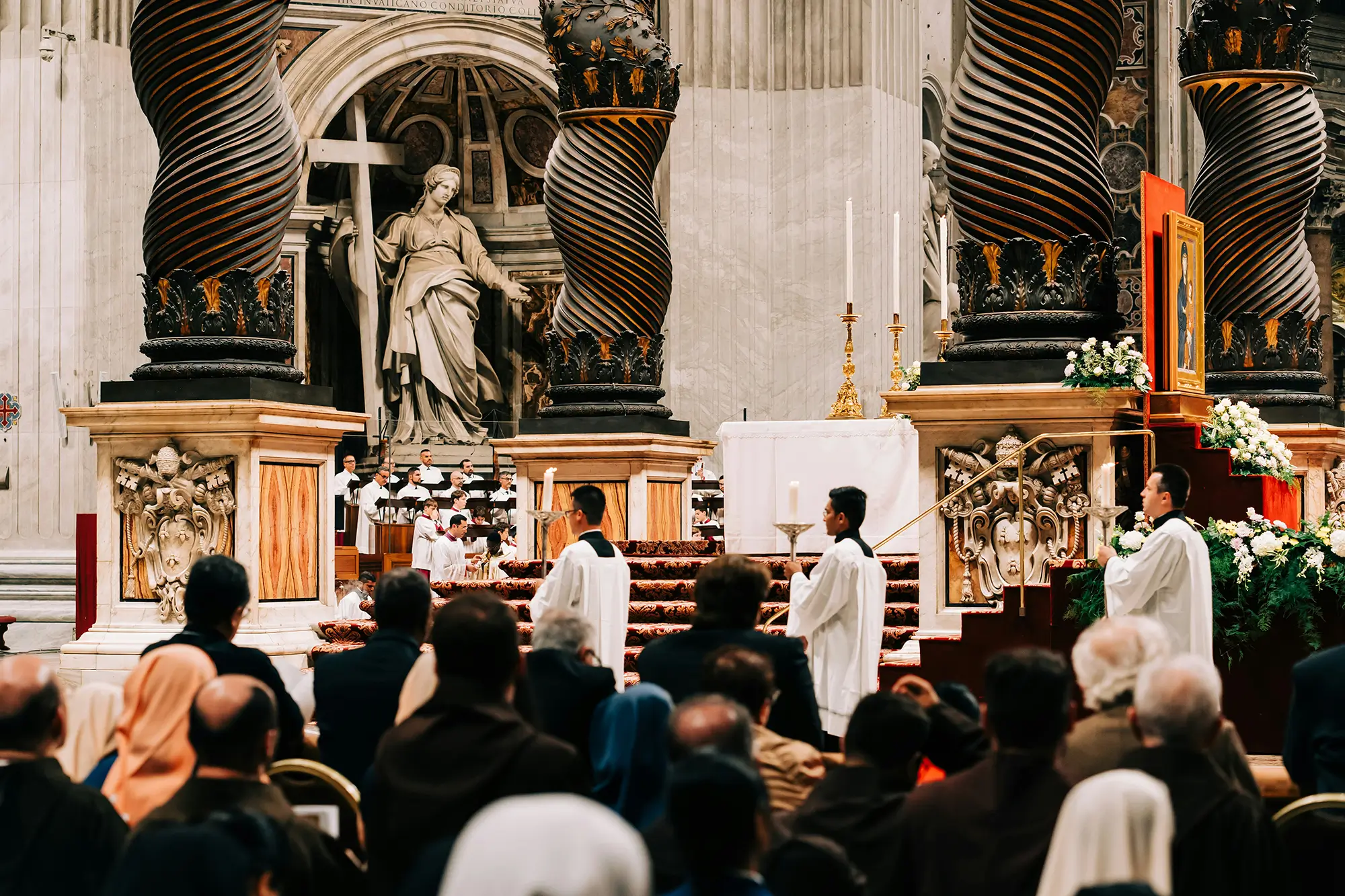
Top Image: A solemn religious ceremony in St Peter's Basilica, Vatican City.