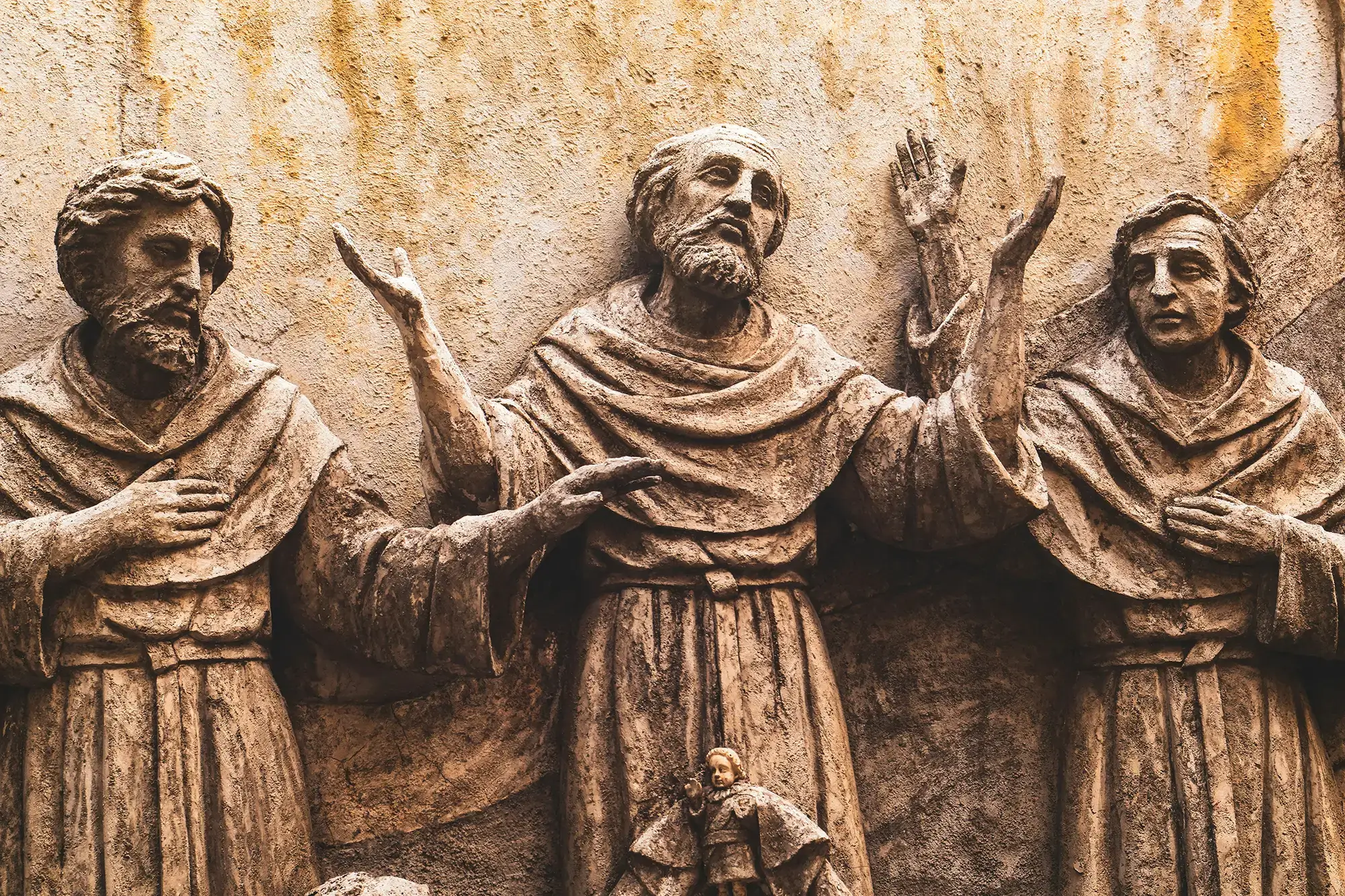
The Liturgy of the Hours does not treat time as neutral. In the third lecture in the Society for Catholic Liturgy series, Rev. Msgr. Andrew Wadsworth, Cong. Orat., reminded us that the Liturgy of the Hours sanctifies the whole day and, by extension, the entire range of human activity: work, rest, worship, and waiting. The point is not to escape time but to offer it to God.
In the time of antiquity, many Christians invested great care in depicting sacred art that accompanied the text of the Liturgy of the Hours. In the fourth lecture of this series, Rev. Innocent Smith, O.P., presented a theological impetus for this. Images in the liturgical books are rooted in St. Paul’s vision of Christ dwelling in and speaking through the Church. The Hours are not only about prayer; they are an ecclesial reality in which Christ’s worship reaches the world through his members.
Let us first explore with Msgr. Wadsworth how the Liturgy of the Hours is meant to permeate our entire day. Then we will turn our attention to the beauty that attends what is holy as explained by Fr. Innocent.
Why the Liturgy of the Hours
Begins the Evening
Msgr. Wadsworth outlined the structure of time in Scripture and the Church’s practice. The biblical narrative begins with days: Creation is ordered into time, beginning with each evening and ending before the following evening. The day of the Liturgy of the Hours is patterned on the creation narrative, beginning with Vespers (Evening Prayer) on the evening before. This is detailed in the Church’s broader liturgical practice, for example, the celebration of liturgical vigils before major Feast Days.
There is a distinctive meaning of the seventh day, marked by worship and rest. In other words, time is not merely measured; it is shaped toward holiness.
Holiness in the
Passage of Time
Msgr. Wadsworth linked the sanctification of time to God’s call for holiness in his people: a kingdom of priests and a holy nation. When God’s plan touches the human person, it touches the human experience of time, marked by the passing of days, weeks, months, and years.
God’s action in the world and the Church’s liturgical life have a continuity. The tabernacle existed in time and space; similarly, the Liturgy of the Hours grows out of prayer practiced in real communities, including the Church’s inheritance of synagogue worship. From this perspective, time is inseparable from human experience; therefore, time becomes part of how Christians are formed.
St. Augustine’s Three “Times”
and Christ’s Mysteries
To frame how liturgy relates past, present, and future, Msgr. Wadsworth drew on St. Augustine of Hippo: “It might be appropriately said that there are three ‘times’: a present of things past, a present of things present and a present of things future.” In the Liturgy of the Hours, the presentness of time is not philosophical speculation. It is enacted in worship.
The Hours commemorate the hours of Christ’s saving work: his Crucifixion and Death, his Resurrection, the Descent of the Holy Spirit, etc. As the Church moves through her daily prayer, the liturgical seasons correspond to the life of Christ and the Church, for example, his Birth, Death, and Resurrection. Thus, the liturgical cycle does not merely mark hours on a clock; it marks the sacred hours by which our salvation is accomplished and applied.
Hymns of the Hours:
Praying the Order of the Day
In the text of the hymns of the Liturgy of the Hours, this theology of sanctified time becomes audible and memorable. Msgr. Wadsworth drew attention to hymns that explicitly keep the order of the day “with loving heart and earnest prayer”; he referenced others that connect certain Hours to particular moments in the history of salvation.
For example, one hymn presents prayer at “this third hour” as a humble request for the glory of God’s threefold power, asking that the Holy Spirit may dwell in the Church. It recalls that the Spirit came to rest “on each Apostle” at that hour. The hymn does more than narrate; it invites every Christian to participate.
Other hymns express the same movement across the day. The Hours lead Christians to recognize Christ as the One who “adorn[s] all things” and places them, with splendor, as an “everlasting crown.” Another hymn addresses God as the “mighty Ruler” who sets bounds for days and seasons, “clothe[s] morning light,” and gives the brightness of midday. The hymn then turns outward in moral prayer: It asks God to extinguish flames of bitter strife, remove harmful passion, grant health to mortal frames, and bestow true peace on every Christian’s heart.
In short, the hymns treat time as something that can be purified, ordered, and healed. The day becomes a place where Christ’s mysteries are contemplated and where charity is strengthened.
Cantillation:
Worship That Sounds Like Time
Msgr. Wadsworth noted cantillation belongs to the experience of worship. This is not a cosmetic detail. When hymnody is chanted, the Church’s prayer becomes more clearly communal and more deeply set in time since it is anchored in rhythm, voice, and repetition. Even the way the words are carried helps the faithful recognize sanctifying time is a matter of both content and form: What we sing and how we sing trains us to receive each day as a gift from God.
The tempo and general rhythm are not the only important characteristics of chanting. Singing is a legitimate mode of prayer that appeals to our senses and engages us on a deeper level, a prime example of how created beauty can draw our attention to uncreated Beauty. As we shall see, visual beauty also plays a crucial role in attracting us to the sublime.
Beauty in the
Liturgy of Antiquity
In the fourth lecture in the Society for Catholic Liturgy series on the Liturgy of the Hours, Fr. Innocent introduced medieval psalters from around the sixth century onward, highlighting their purpose as structured books for weekly prayer. The Psalms were divided for use according to different cycles (such as Roman and monastic rhythms), both for convenience and to make the psalter livable as a daily encounter with God.
Decorations played an essential role. Ornamentation of the manuscripts guided readers toward the right Psalms by day and hour, turning the Psalms into a visible pathway through time. This made the beauty of holiness practical: Beauty helps the faithful pray.
Blanche of Castile’s Psalter:
Illumination That Fits Prayer
Fr. Innocent gave a central example: an early thirteenth-century psalter, “likely commissioned by Blanche of Castile.” He described how the illumination of this psalter corresponded to her liturgical and devotional life. The images and prayers worked together to draw the Christian into a weekly cycle of prayer, where the Church’s worship and the person’s attention are shaped in tandem.
Walking through the manuscript’s weekly order, Fr. Innocent emphasized typology—especially David as the “blessed man” who prefigures Christ.
Monday’s Psalm 26 (David’s anointing) was linked to the baptism of Christ. Tuesday’s Psalm 38 presented David guarding his tongue, connecting prayer to conscientiousness: What a person speaks should reflect what he or she believes and how he or she prays.
The tripartite psalm divisions are made visible through additional initials. For example, Psalm 51 appears with David and Goliath, and Psalm 52 with David resisting devils—images that assist the individual using the psalter to recognize the reality of spiritual combat and to request and rely on divine deliverance.
As the week unfolded, the psalter continued to teach through imagery: David prayed in water (Psalm 68), praised with instruments (Psalm 80), and sang (Psalm 97). The manuscript then returned to Blanche of Castile praying before the divine, underscoring the aim of illumination—devotion, not distraction.
The weekly cycle culminated with Psalm 109 at Sunday Vespers (“The Lord said to my Lord…”). Fr. Innocent highlighted a traditional depiction of the Blessed Trinity: Father and Son shown as identical except for garment colors, with the Holy Spirit between them, which is an iconographic echo of the theological logic associated with the Filioque. This shows how medieval psalters treat the Hours not as isolated recitation but as carrying the Church’s doctrine into daily prayer.
Psalm 97 as
“Singers at the Pulpit”
From this point, Fr. Innocent broadened into a tour of French, English, and Italian Bibles and psalters. Psalm 97 repeatedly appeared as what he called “singers at the pulpit,” with depictions varying in richness and number of singers.
Some manuscripts show a single singer, while others display multiple singers in small continental manuscripts, using coded vestment colors and increasingly varied imagery. In some instances, the Nativity was used to explain why the Psalms are sung, connecting incarnation and praise in a visual theology.
A French-language, fourteenth-century miniature provides a vivid example: Clerics sing from an architecturally detailed lectern. The altar and tenting suggest they are praying the Liturgy of the Hours rather than the Holy Mass, reinforcing that the Hours have their own distinct liturgical identity.
Fr. Innocent noted later examples that broaden the “singers at the pulpit” theme into fuller scenes of the Liturgy of the Hours. Some psalters are multilingual and pair prayer with imagery of the union of heaven and earth.
King Henry VI’s [of England] royal psalter expanded beyond Psalm 97 through scenes across the week: clerical choirs, Franciscan sisters, the Blessed Virgin Mary with Jesus Christ, friars praying from memory, and Dominican nuns in choir. Although there is debate whether Mass or one of the Hours is implied in some settings, the overall point stands: The Liturgy of the Hours is a real ecclesial act, lived by diverse members of the Church. The lecture concluded with two complementary emphases: First, the “beauty of external bodies,” as Fr. Innocent called it, matters. Even private prayer involves the body—including the voice, posture, and tangible acts—and can thus unite a person to the heavenly liturgy. Second, the Church strongly values communal celebration. Even when individual Christians are praying, the Hours aim at ecclesial unity.
Conclusion:
Renewed Devotion
The Liturgy of the Hours can renew people’s devotion, encouraging listeners to support one another in praying the Psalms, hymns, and spiritual songs with greater reverence. It sanctifies our time on earth by placing the whole day within the context of the life of Christ and his Church. Such prayer calls to mind what is most important and serves as a school of holiness. The seasons become a map of salvation, and even the hymns invite the praying soul to seek peace, healing, and the indwelling of the Holy Spirit.
Midwest Theological Forum was selected by the Committee on Divine Worship of the USCCB to publish Extracts of the Liturgy of the Hours, Second Edition. Click here to learn more about the ongoing work being done on the Liturgy of the Hours.
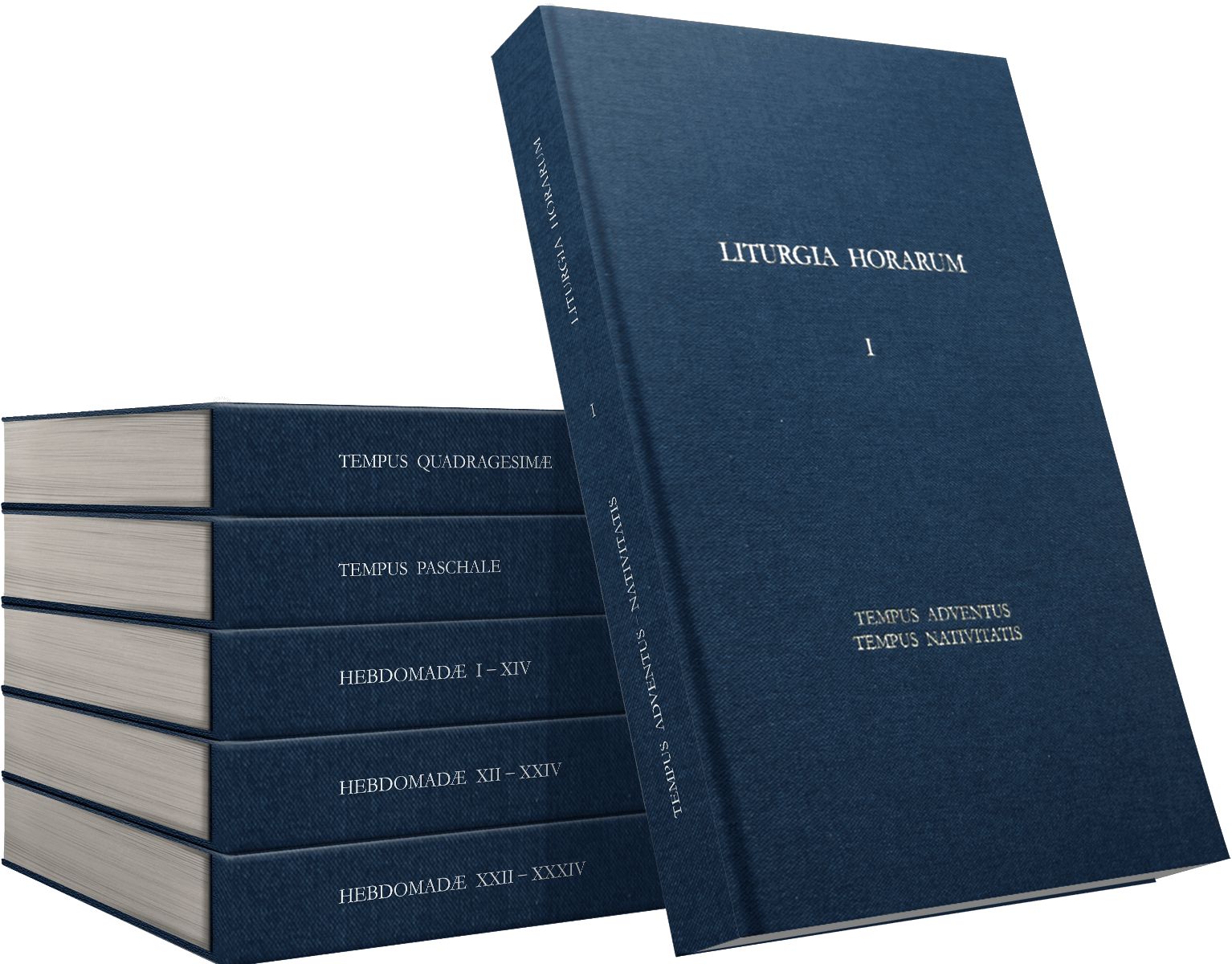
Photo: Santo Niño Church in the Philippines.