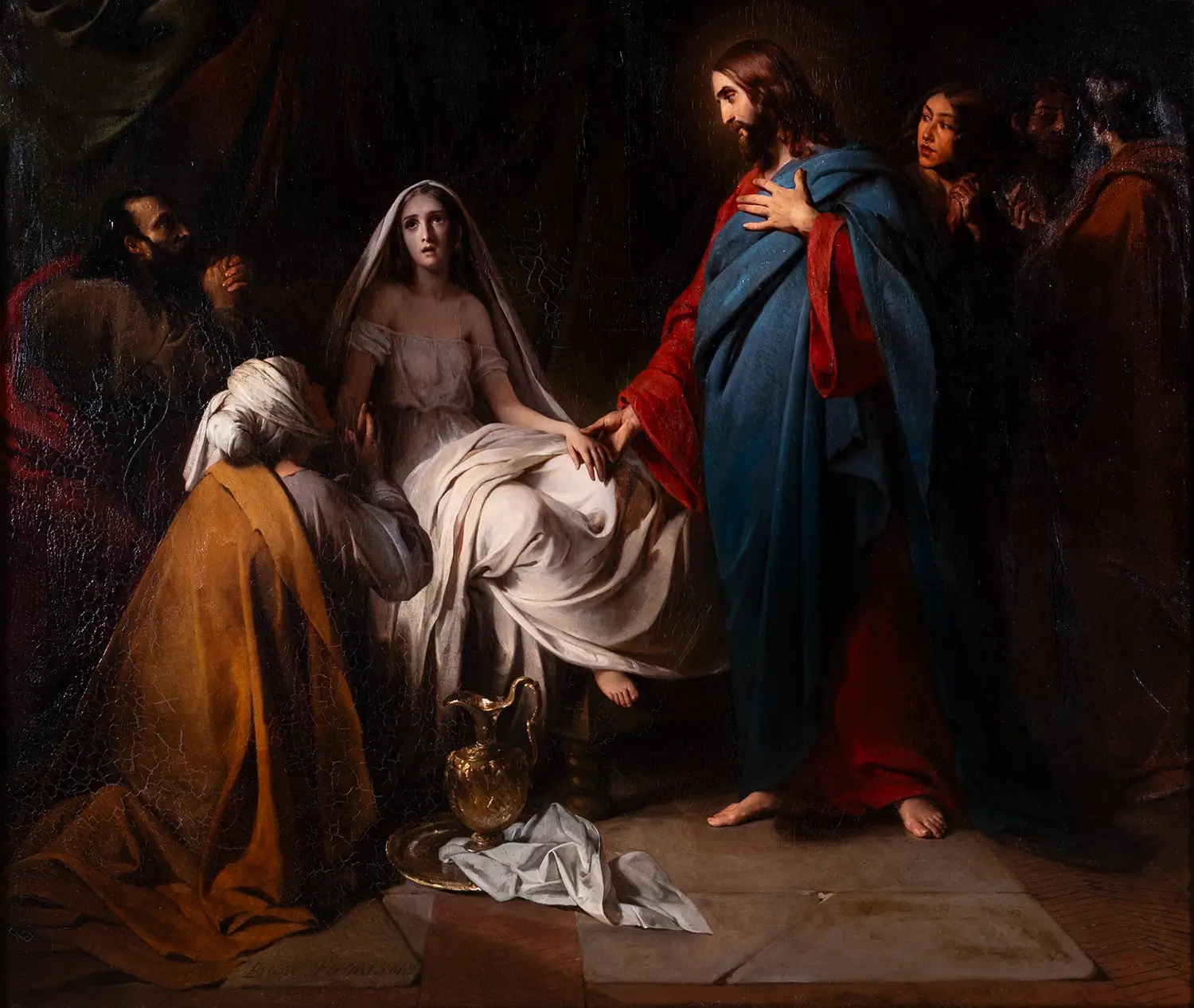
In his Incarnation, Jesus Christ came to sanctify every aspect of human life. Through prayer and the Sacraments, we are able to encounter him while eating and drinking, interacting with our friends and family, and working diligently each day. This even extends to the most severe moments of life, like illness and death. Christ meets us even here and has instituted a particular Sacrament to extend his healing presence to us: the Anointing of the Sick. This Sacrament brings about our strengthening in time of sickness. To that end it can also bring about bodily healing if conducive to the person’s salvation and the forgiveness of sins if one can not receive the Sacrament of Penance.
“The Lord Will Raise Him Up”
The primary effect of this Sacrament is the strengthening of the sick person amidst their suffering. During times of trial it can become increasingly difficult to persevere in the faith, hope, and love proper to Christian life. Far from being callous to this fact, our Lord gives us this Sacrament as his chosen means for strengthening us in these times. We receive deeper gifts of courage and trust in God’s providential care. These are “a gift of the Holy Spirit, who renews trust and faith in God and strengthens against the temptations of the evil one, the temptation to discouragement and anguish in the face of death” (CCC 1520). This can be seen from the earliest centuries of the Church, as when the Apostle James wrote:
“Is any among you sick? Let him call for the elders of the church, and let them pray over him, anointing him with oil in the name of the Lord; and the prayer of faith will save the sick man, and the Lord will raise him up; and if he has committed sins, he will be forgiven.” (Jas 5:14-15)
This “raising up” is the work of the Holy Spirit in the soul, enabling us to keep our eyes fixed on our Savior despite the pain and anxiety we may be enduring.
“He Will Be Forgiven”
As James notes, this spiritual “raising up” also extends to rooting out sin and its effects from our lives. When we love created things more than our Creator, we understandably come to have anxiety over the potential loss of these things by our suffering and possible death. This improper attachment to created things is both a cause and an effect of sin in our lives. As Jesus Christ came to destroy the works of the devil (cf. 1 Jn 3:8), he wishes also to destroy these roots and branches of sin within us. These being destroyed, we can cleave more closely to our Lord and see him present with us during our sufferings. This effect of the Sacrament is so strong, that it can even forgive sins if it is impossible for the recipient to receive the Sacrament of Penance and Reconciliation (cf. CCC 1532).
“The Prayer of Faith Will Save the Sick Man”
Finally this Sacrament is at times the means through which God brings about our bodily healing. Far from being separated from our physical pain, Christ comes close to us in this state during his Passion, knowing our weakness (cf. Heb 4:15). This is why throughout his earthly ministry, Jesus healed untold numbers and sent out his apostles to do the same. This work is not ended but continues by means of the Church in her care for the sick and poor and in her Sacraments. Crucially the recipient only receives this healing “if it is conducive to the salvation of his soul” (CCC 1532).
“Is Any Among You Sick?”
All these effects of Anointing of the Sick mean that it is not reserved solely for those on the brink of death or as a part of Last Rites (which also includes Confession and Holy Communion). Rather this Sacrament is commended to all the faithful who are experiencing grave illness, a worsening of the same illness, before major surgery, or an increase in the weakness of old age (cf. CCC 1514-1515). This gift is for all the baptized who are experiencing more acutely the effects of sin, death, and decay. In this Sacrament we invite Christ, the Good Physician, into the darkest parts of earthly existence. He brings Light and Everlasting Life, enabling us to say with St. Paul, “O death, where is your victory? O death, where is your sting?” (1 Cor 15:55).
Sam Landon
Sam Landon is an Associate Editor at Midwest Theological Forum. He holds a master’s in religious studies specializing in New Testament and early Christianity from the University of Chicago. He has worked extensively in campus ministry to help young adults grow closer to Christ. He and his wife live in Chicago, IL.

Raising of the daughter of Jairus by Aimée Brune-Pagès.