Protagonists of the Common Good
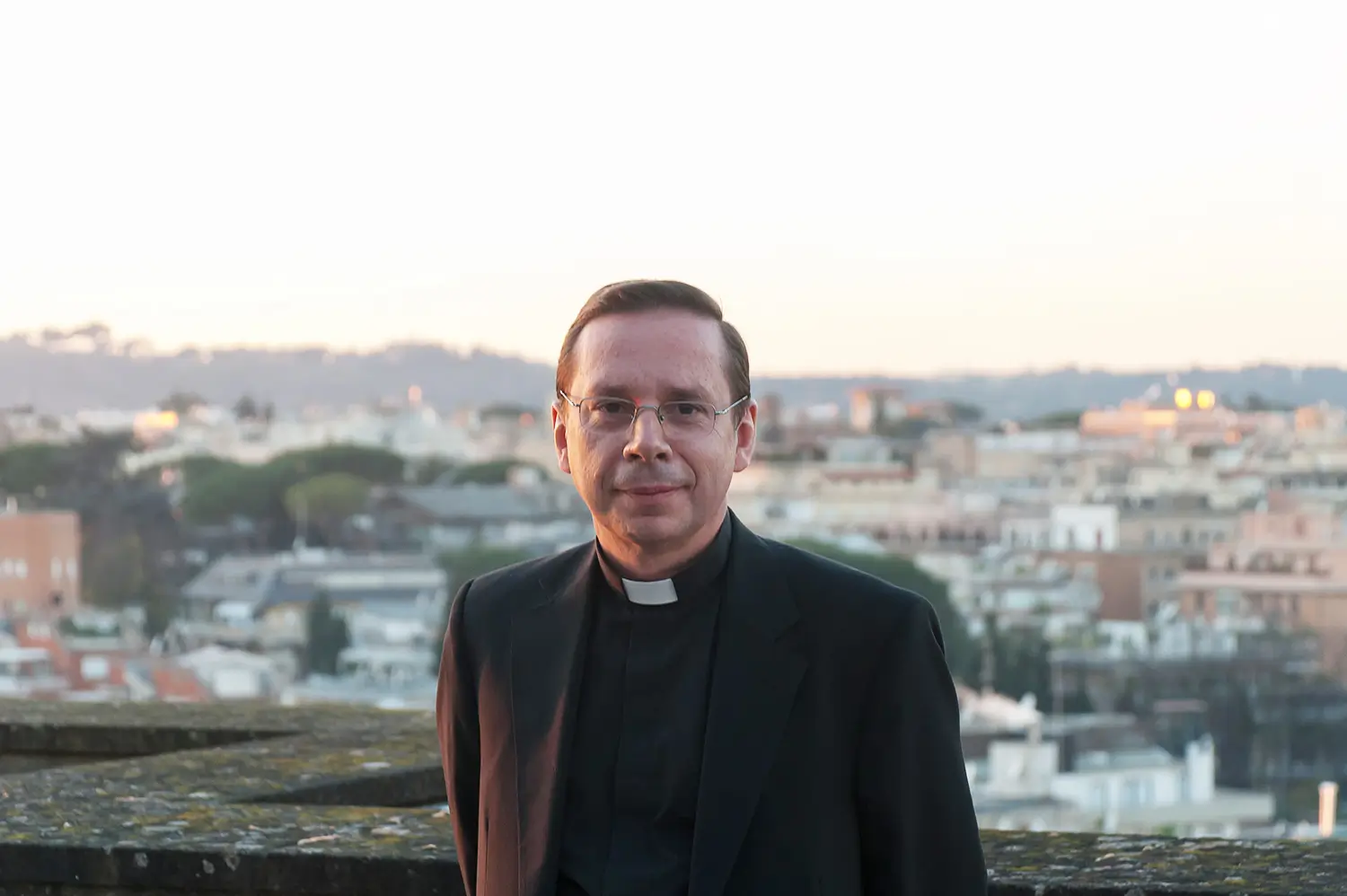
Msgr. Mariano Fazio, Auxiliary Vicar of Opus Dei, announced the release of his new book, Protagonists of the Common Good: St. Josemaría Escrivá and Christians in Contemporary Society, published in Italian by Edizioni Ares.
Drawing especially from the teachings of St. Josemaria Escriva, Msgr. Fazio sets out to inspire Christians to live their faith fully in society for the common good—through work, dialogue, charity, and professional excellence.
In a recent interview, the author reflected on his new book which calls Christians to become true protagonists of the common good, living their faith fully in the heart of the world.
Here are five key moments from the interview:
1. Christian Faith and the Common Good
Msgr. Fazio desires to draw attention to the realities of our world today. “We live in a very individualistic society, and I think that raising awareness of Christians’ responsibility to help build a society more in keeping with God’s plan is quite urgent.”
2. The Universal Call to Holiness
Central to St. Josemaria’s message—and to Msgr. Fazio’s book—is the teaching that holiness is for everyone. “We must be good Christians not only in church … but above all in the family, at work, in our social relationships.” St. Josemaria described this as “unity of life.”
3. Loving the World Without Becoming Worldly
Msgr. Fazio draws on the example of Pope Francis to illustrate authentic Christian engagement with culture. “We must love the world without being worldly.” Transformation begins with love: “We are in the world to transform it, and in order to change a reality, one must first love it.” Christians, Msgr. Fazio notes, are responsible for serving society, caring for the poor, and bringing the Gospel to all areas of life.
4. Dialogue, Charity, and Professional Excellence
In today’s polarized world, dialogue is essential. “The Christian must be a person of dialogue, open and respectful towards everyone.” Justice alone is not enough: “Justice needs to be completed by charity.” He also highlights the spiritual value of professional excellence: “How does one sanctify work? First and foremost, by working well.” And he adds pointedly: “We cannot be devout believers and mediocre professionals.”
5. Witness of the Pope
Msgr. Fazio was a friend of Pope Francis. When he mentioned speaking frequently about the Pope during his travels around the world, Pope Francis told him: “It would be better to speak less about the Pope and more about Jesus.” Msgr. Fazio reflected: “This shows the centrality of Christ, as well as the humility of the Pope.”
Timely Vision of Christian Life
Msgr. Mariano Fazio’s thought offers a clear and timely vision of Christian life today—one rooted in holiness, dialogue, charity, and excellence in work.
His full interview can be read on the Opus Dei website.
Following is the book description from Edizioni Ares:
Learn more about Msgr. Fazio’s Protagonists of the Common Good.
Msgr. Mariano Fazio is a renowned historian and philosopher who has authored more than 20 books, including History of Contemporary Ideas: The Process of Secularization from the Renaissance to the 21st Century, which is published by Midwest Theological Forum.

Photo from Prelatura de la Santa Cruz y Opus Dei